coffee-gen-ai
What’s next for AI agentic workflows - Andrew Ng
Here are some notes based on this video.
slide 1:
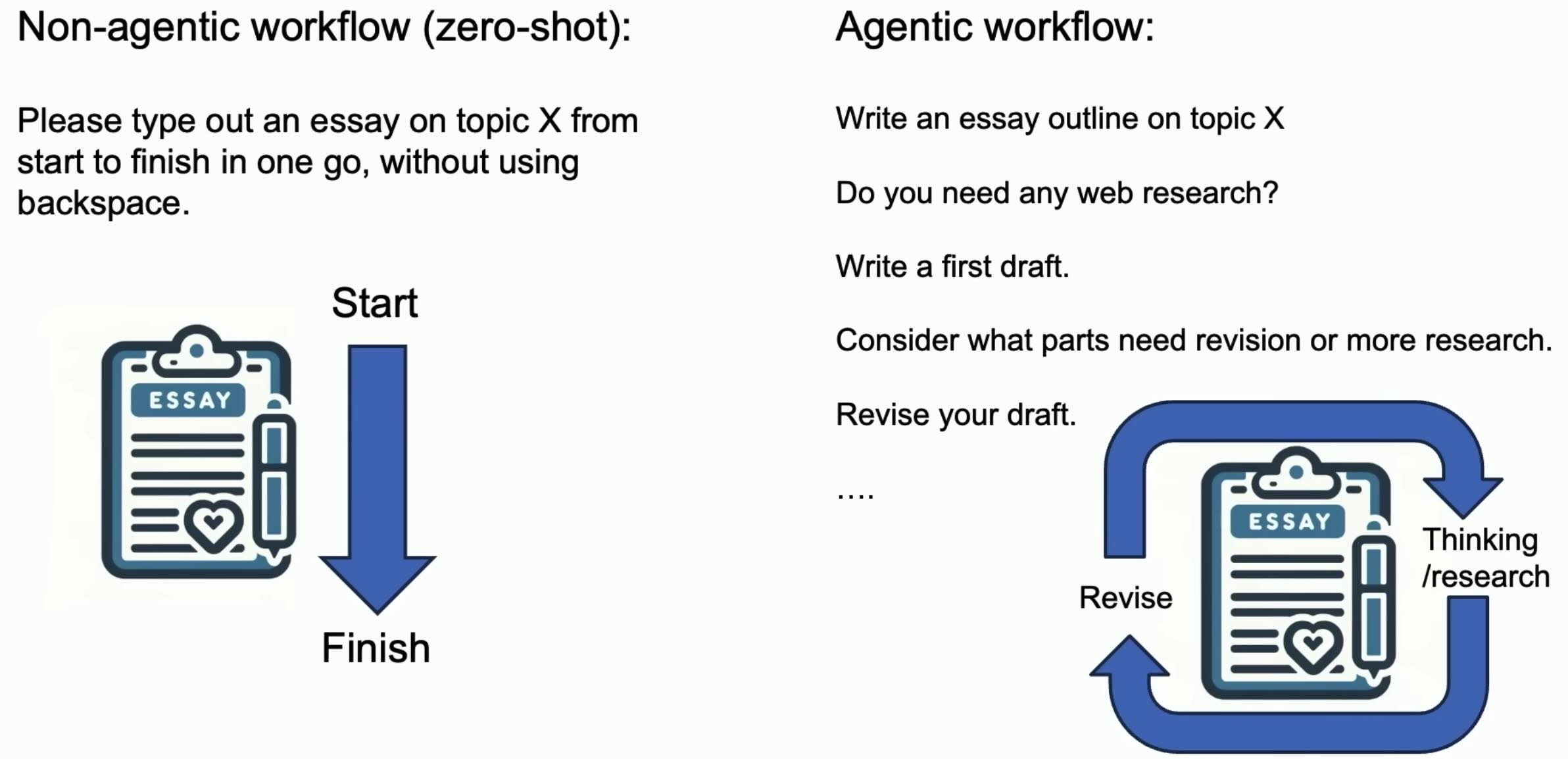
- Agentic workflows are iterative which involves some thinking and revising.
slide 2:
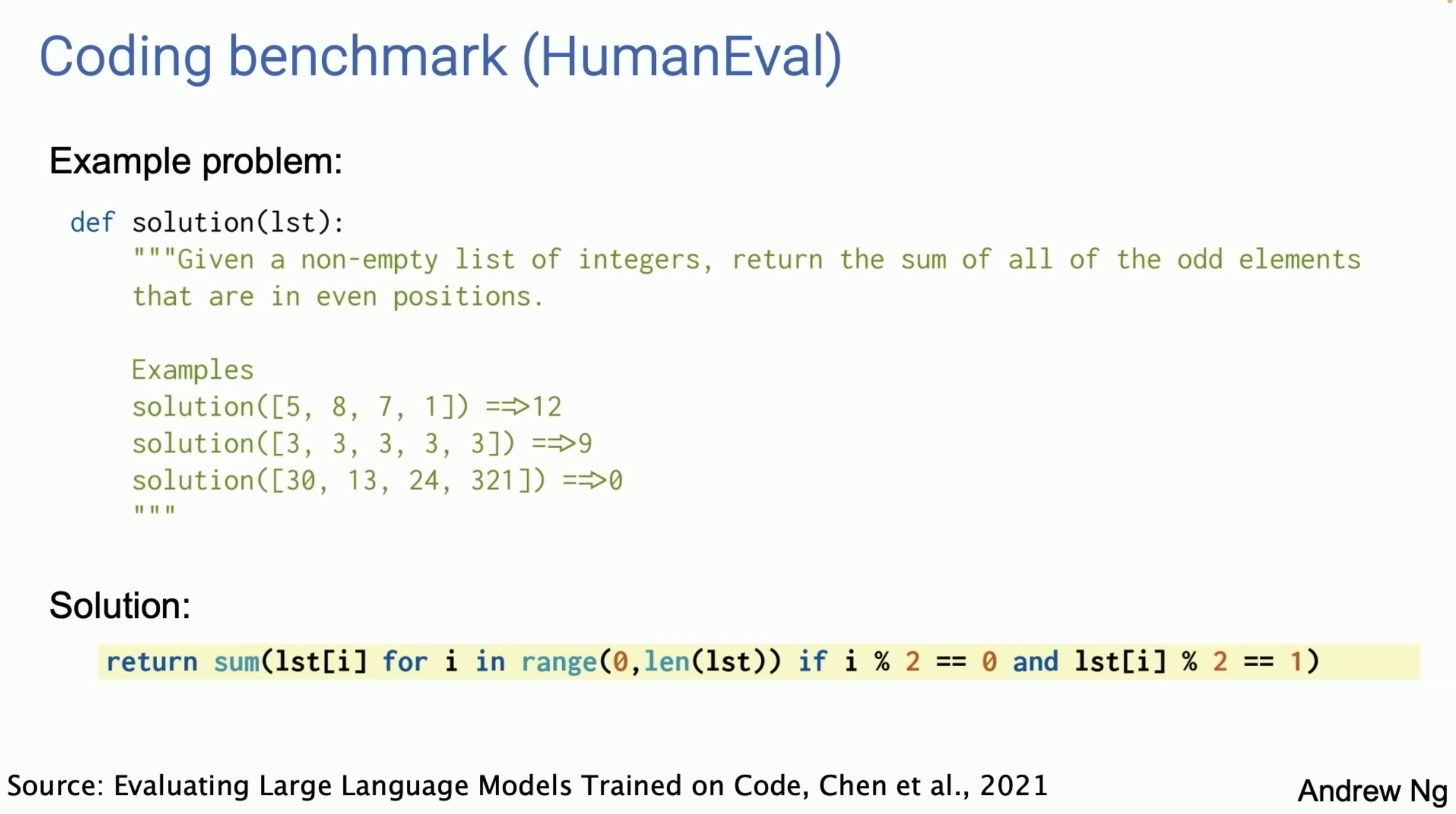
- Example of HumanEval benchmark, by openai - [github] - released 2021
slide 3:
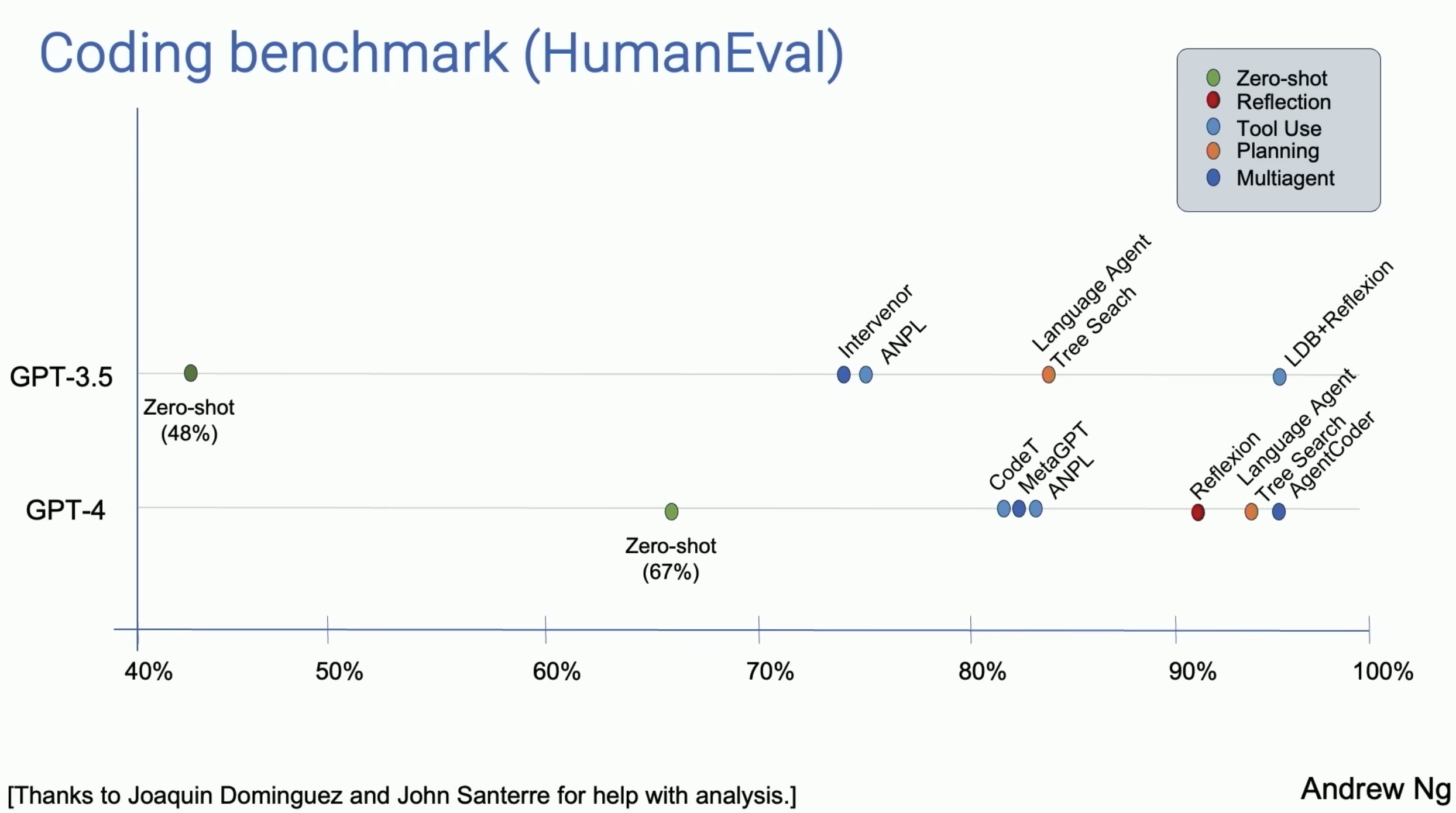
- Performance of gpt3.5 and gpt-4 on HumanEval benchmark in Zero shot and Agentic settings.
slide 4:
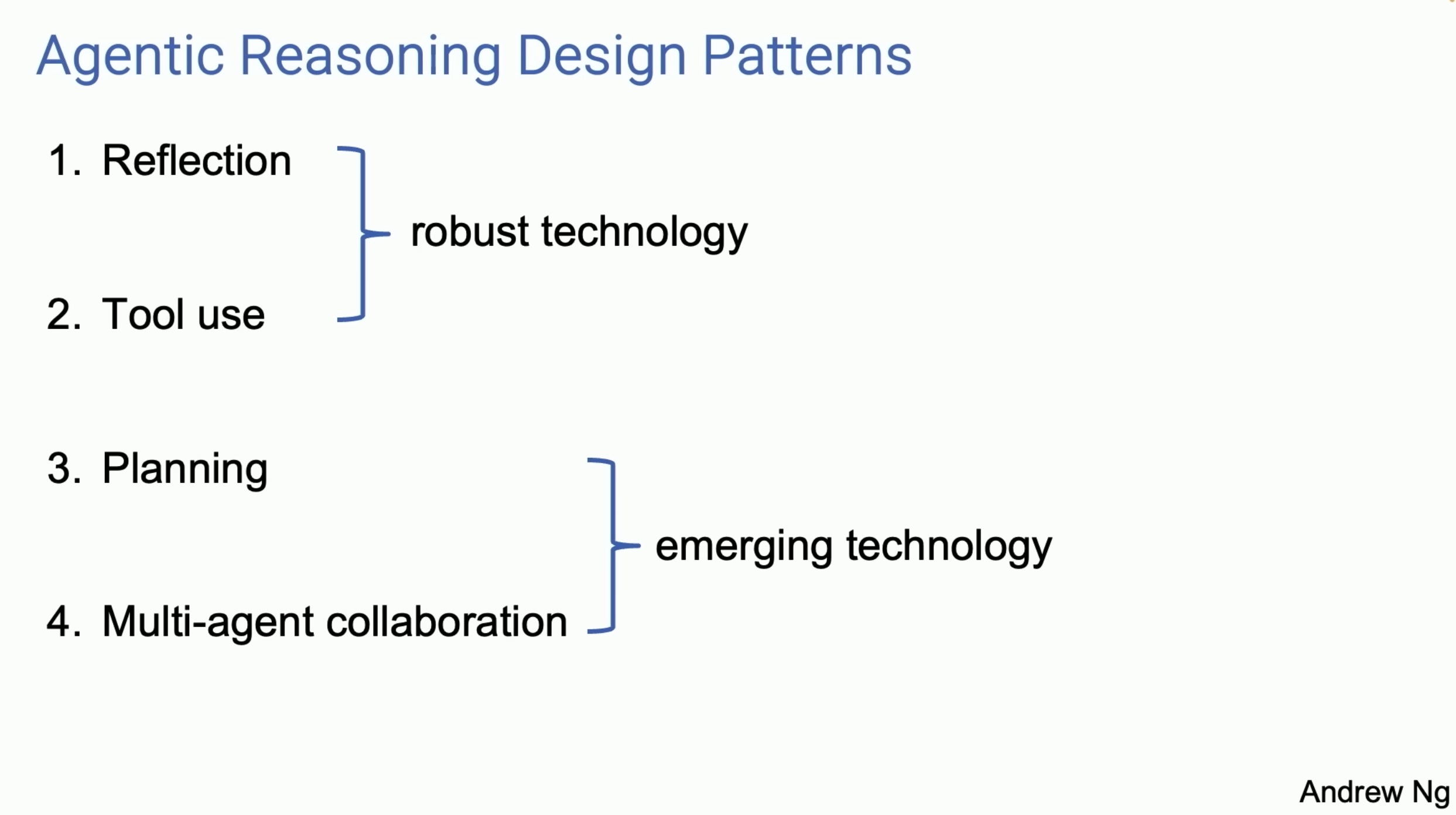
- Let’s explore these 4 design patterns
slide 5:
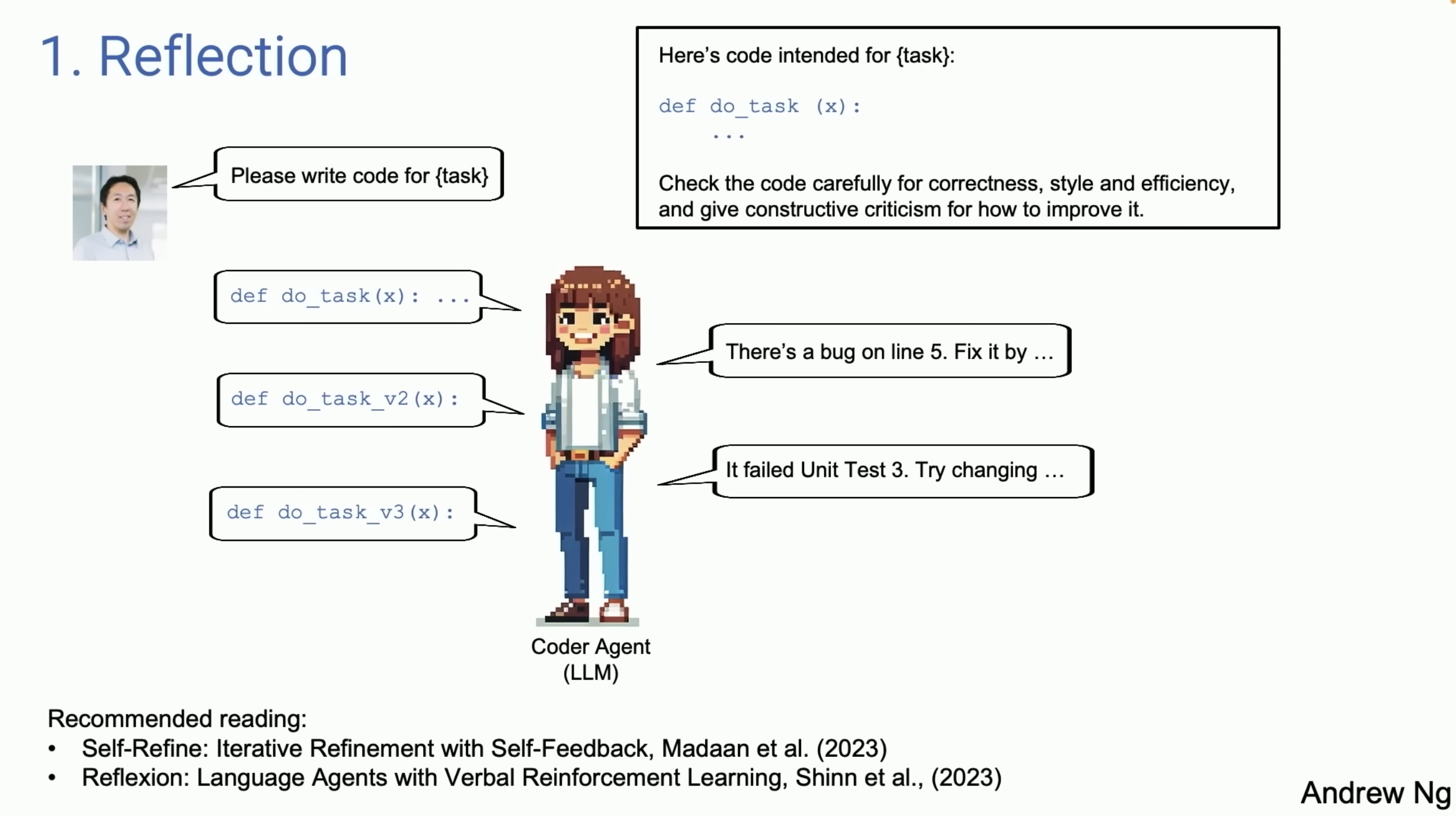
- Ask the LLM-itself to critic itself.
- Recommended read:
slide 6:
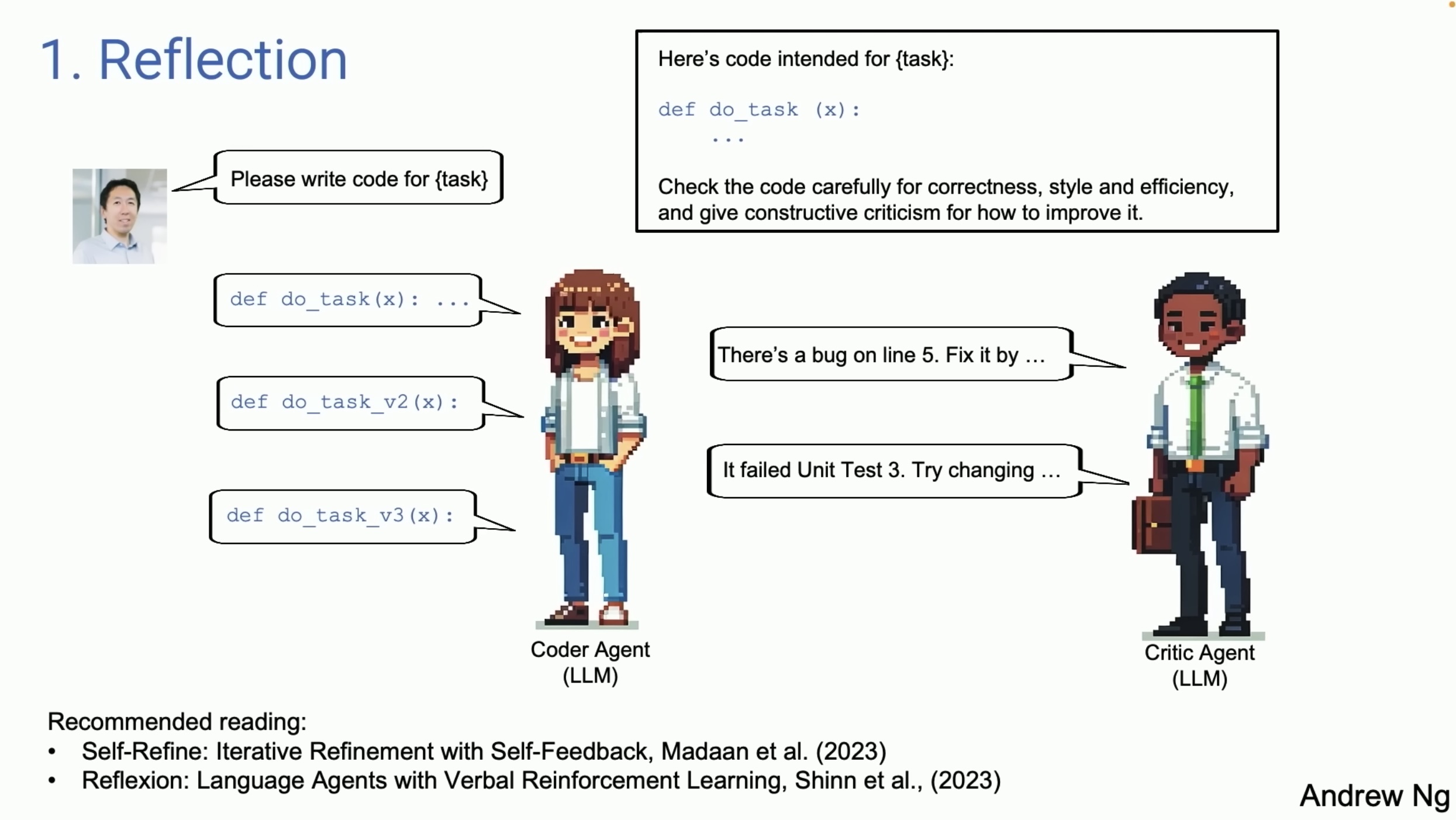
- Ask another agent to Critic the first Agent results.
slide 7:
slide 8:
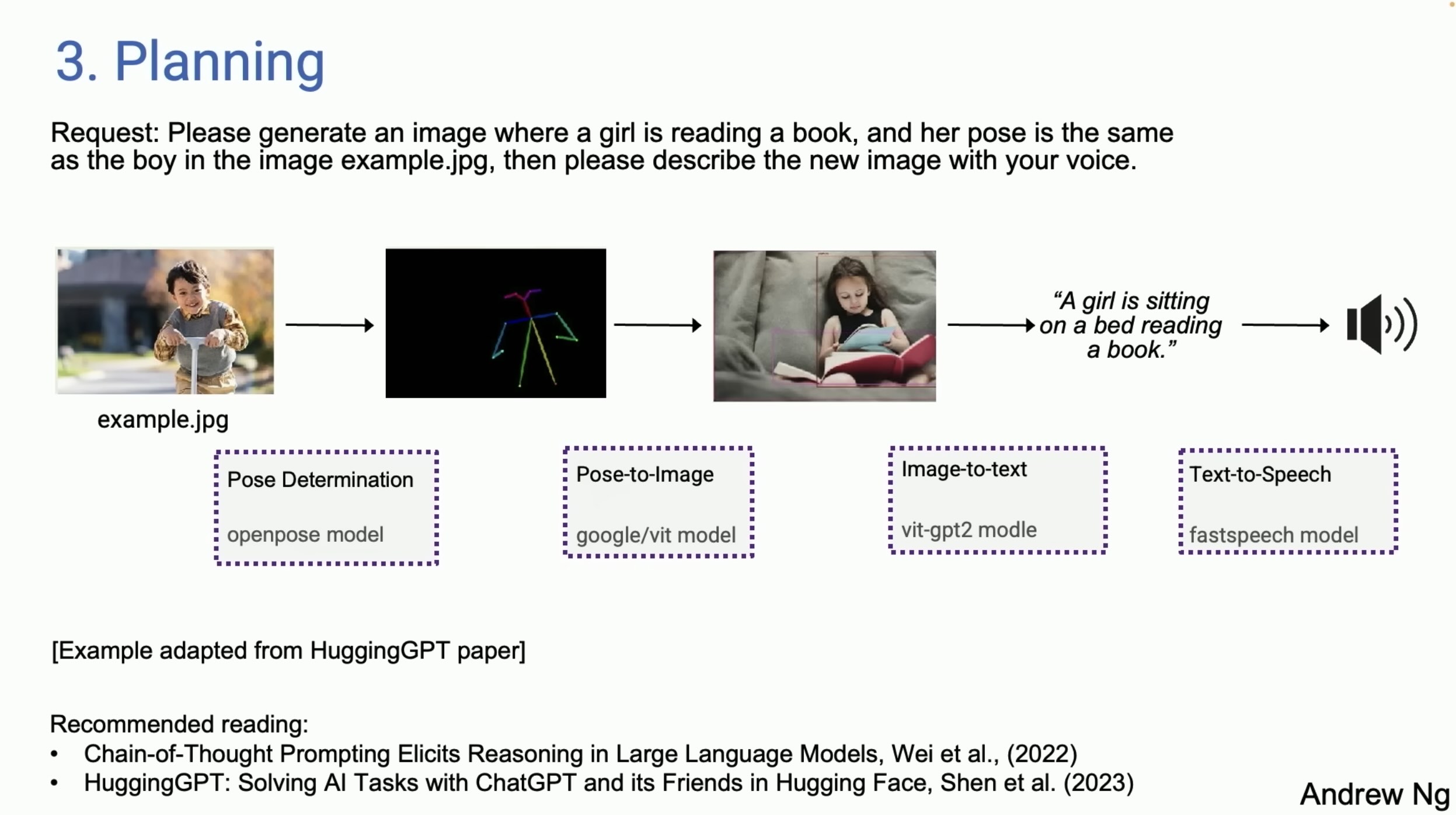
slide 9:
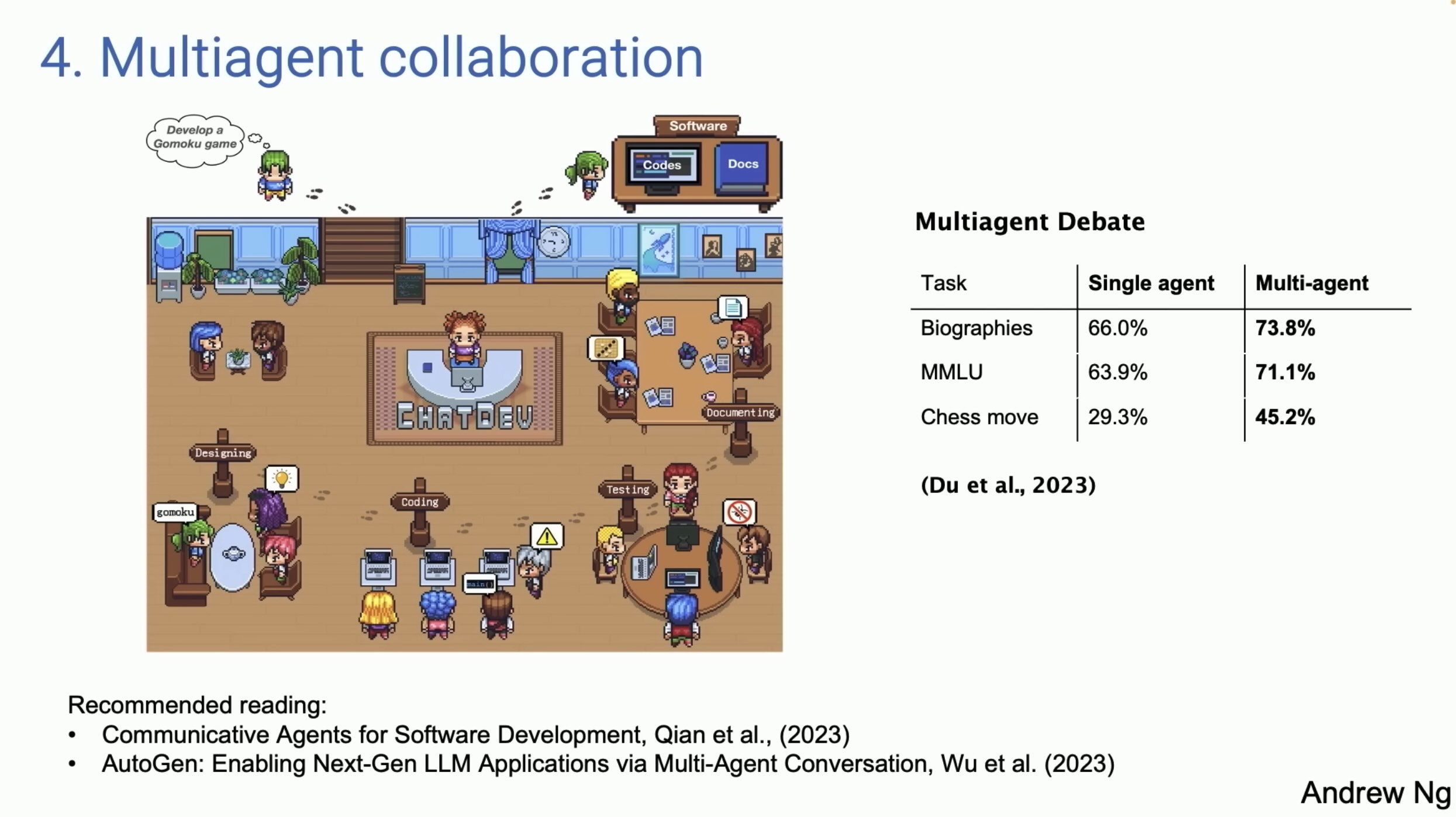
slide 10: Agentic Reasoning Design Patterns
- Reflection
- Self-Refine: Iterative Refinement with Self-Feedback, Madaan et al. (2023)
- eflexion: Language Agents with Verbal Reinforcement Learning, Shinn et al., (2023)
- Tool use
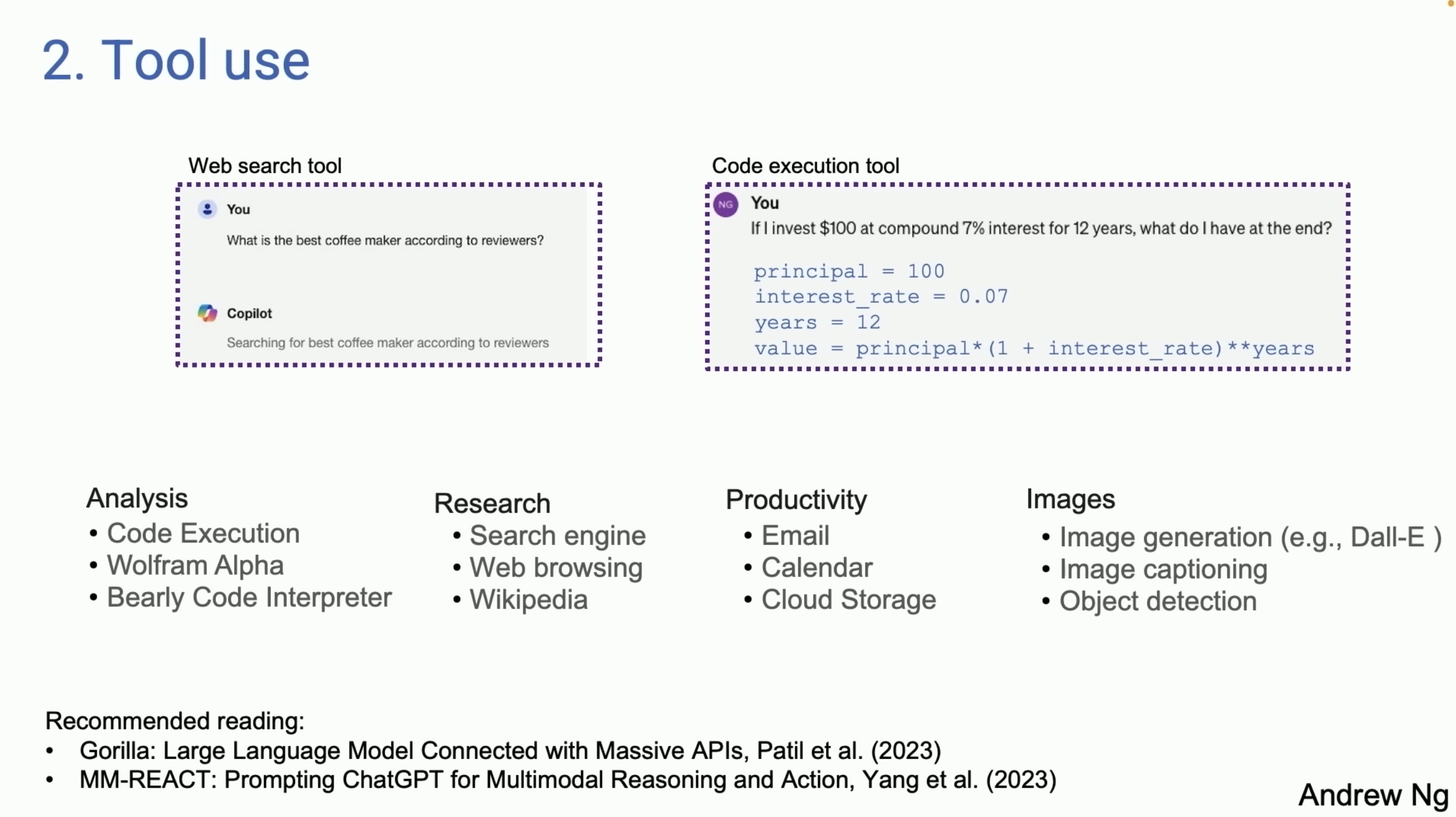
- Gorilla: Large Language Model Connected with Massive APls, Patil et al. (2023)
- MM-REACT: Prompting ChatGPT for Multimodal Reasoning and Action, Yang et al. (2023)
- Planning
- Chain-of-Thought Prompting Elicits Reasoning in Large Language Models, Wei et al., (2022)
- HuggingGPT: Solving Al Tasks with ChatGPT and its Friends in Hugging Face, Shen et al. (2023)
- Multi-agent collaboration
- ommunicative Agents for Software Development, Qian et al., (2023)
- AutoGen: Enabling Next-Gen LLM Applications via Multi-Agent Conversation, Wu et al.
slide 11: