coffee-gen-ai
Compound AI Systems
By Fatemeh Rahimi, Senior NLP Scientist at Pythonic AI
Presented · March 2025 · Halihax
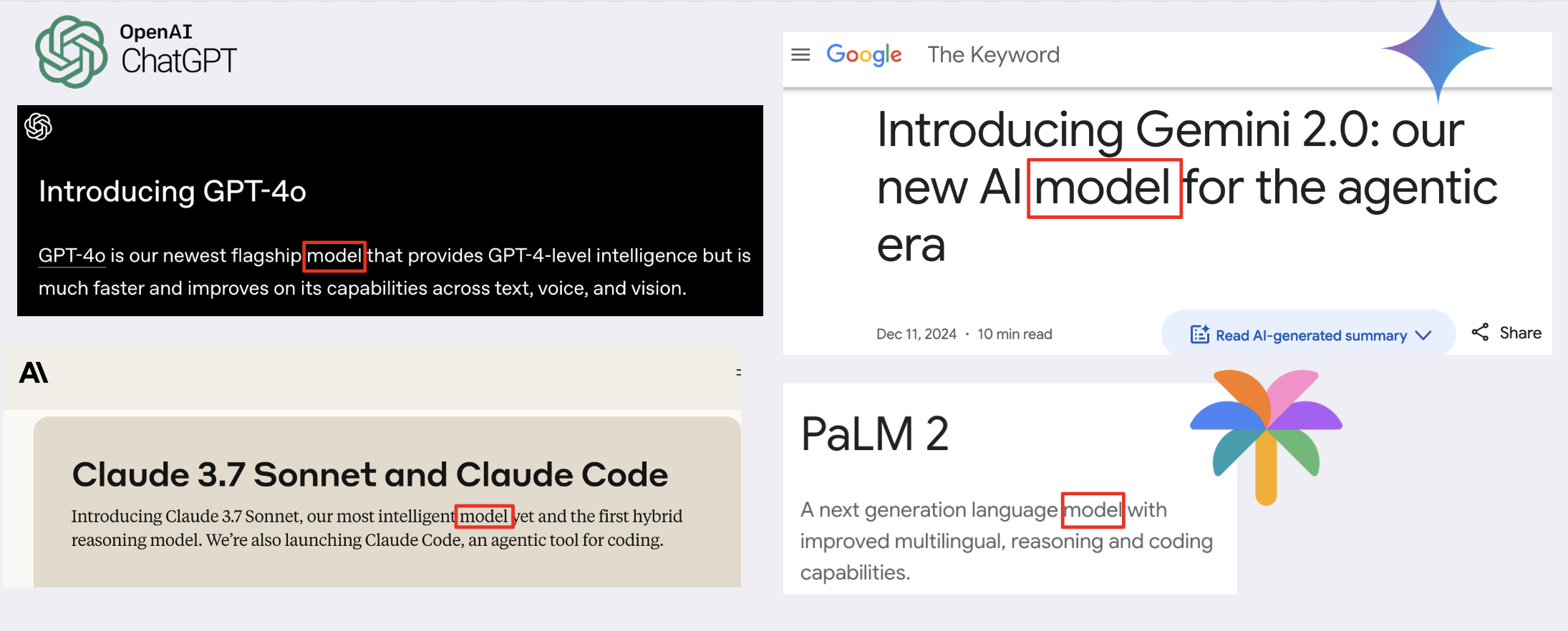
Large Language Models (LLMs) have already reshaped how we think about artificial intelligence. Their headline-grabbing feats—fluent conversation, crisp summarization, even full-stack code generation—are remarkable. Yet the spotlight on individual models can distract us from a more important shift that’s happening right now:
We’re moving from stand-alone models to compound AI systems—cohesive pipelines where multiple models, tools, and feedback loops work together to solve real-world problems end-to-end.
This post explores what compound systems look like, why they matter, and how you can start building them without losing control of complexity.
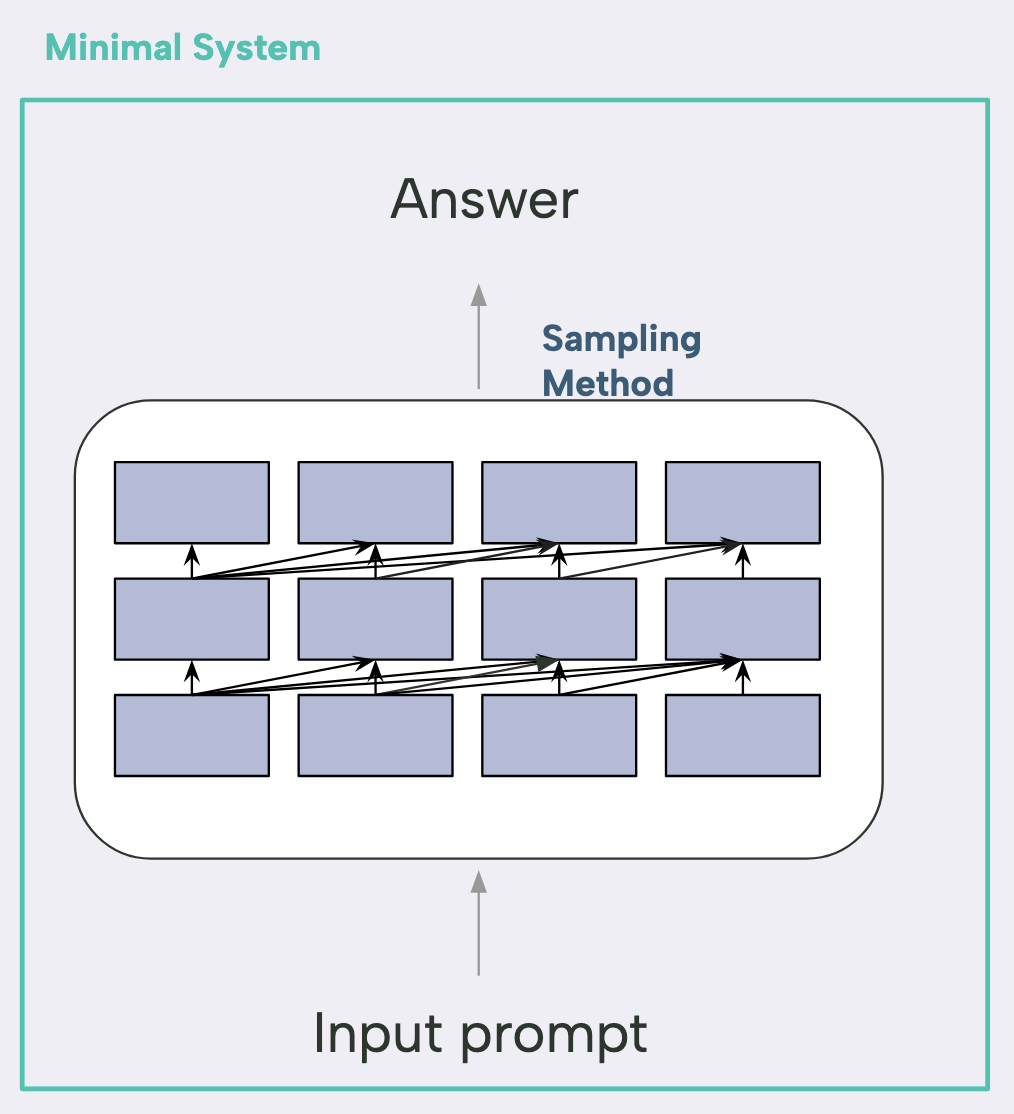
Minimal System
Let’s start with a simple question: What is an AI model?
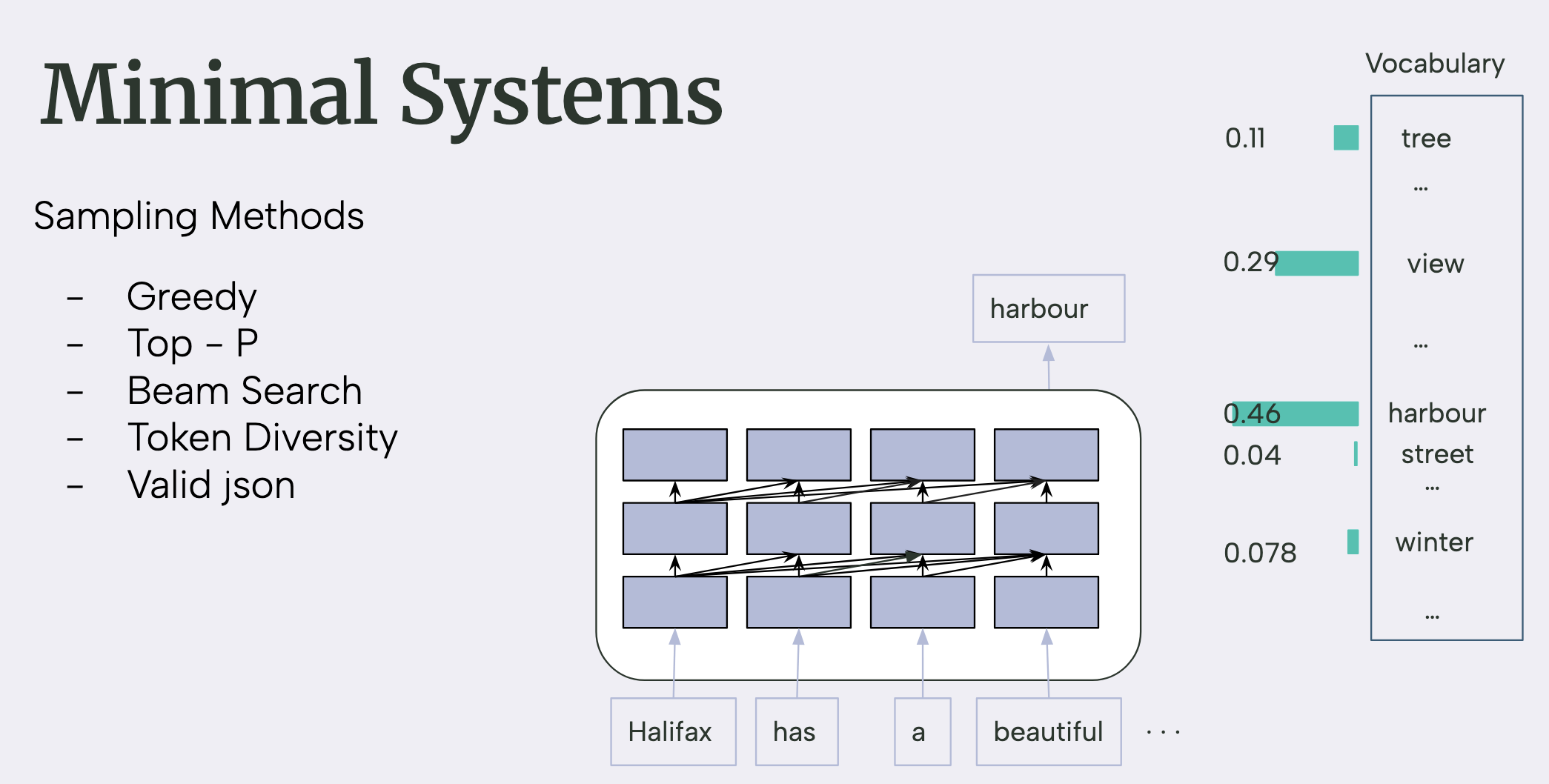
At its core, a model is just a function, you give it an input prompt, it generates you an output. For language models, that usually boils down to “predict the next token” over and over. Add on a sampling strategy (greedy decoding, top-p, beam search, pick your flavour) and you have what is called a minimal system: the bare-bones model plus just enough logic to turn predictions into fluent text.
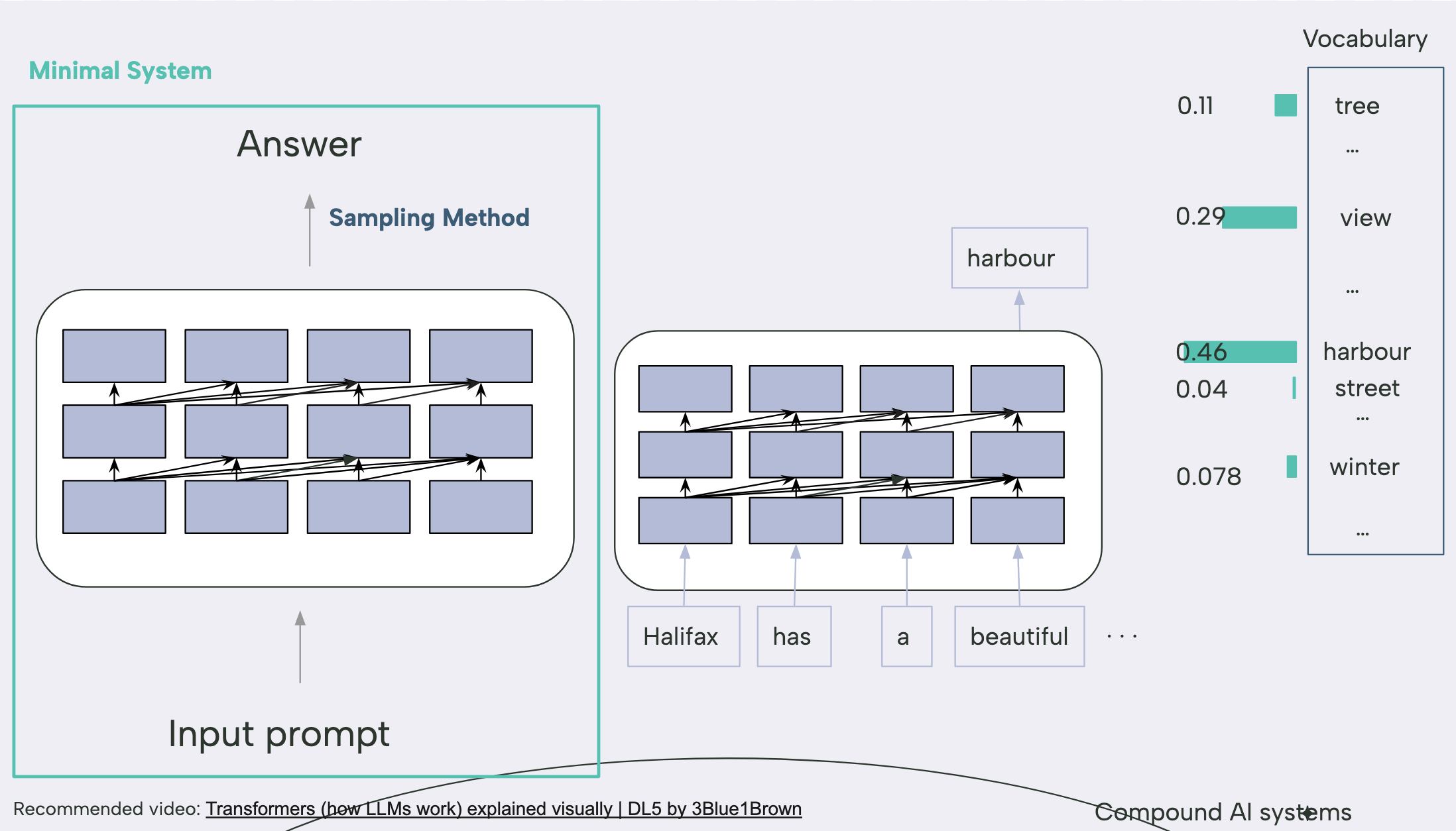
A quick toy example
Say we feed our minimal system the prompt:
“Halifax has a beautiful …”
In more technical terms, the decoder emits a probability distribution over the entire vocabulary, and the sampling step (greedy, in this illustration) simply selects the token with the highest likelihood here, harbour.
Output: “…harbour!”
You can visualise it like a bar chart where harbour towers over the rest. At this level, all the “intelligence” we see is just one function picking the most likely next word.
The minimal system is still just smart autocomplete.
It can’t pull in new facts, run live calculations, or trigger side-effects. It only generates text similar to what is has seen during the training time.
To get something useful we wrap the model in an advanced system that can reach for external tools.
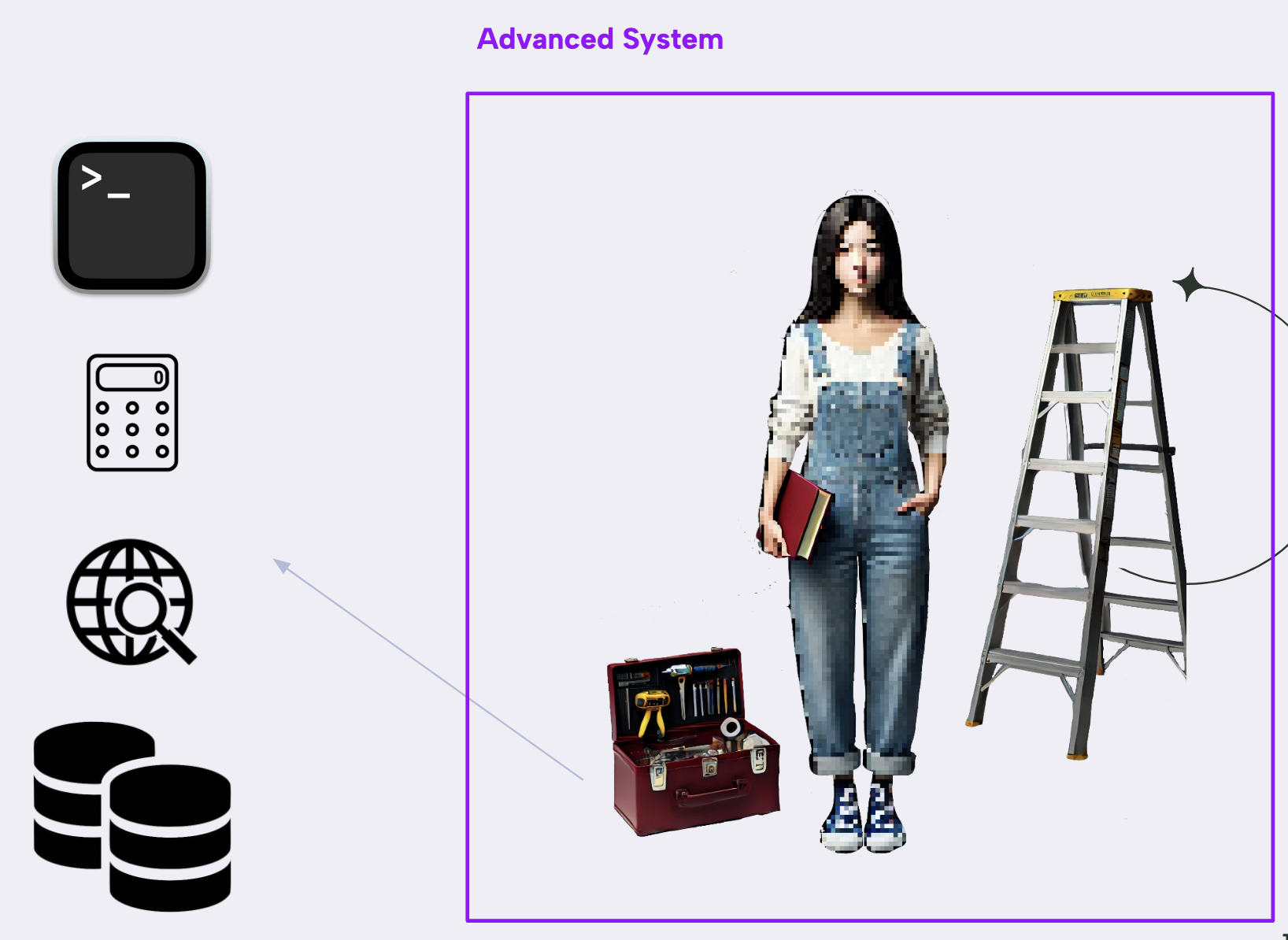
Think of the book as everything the model already “knows”.
The toolbox is runtime power—Python, a calculator, search, your private DB.
Ask ChatGPT to “plot a sine wave” and it writes code, runs it, and shows the chart—that’s the toolbox in action.
When you ask ChatGPT to “plot me a sine wave” and it generates back a chart, that’s the toolbox at work: the model writes code, the system runs it, then pipes the result back to you.
Why systems are important?
1. Some tasks are solved at the system level
Cranking up model size or token budgets is pricey—and it’s not always the shortest path to better results.
Scaling models is expensive and sometimes unnecessary. AlphaCode 2 wrapped a mid-sized model in a generate-cluster-execute pipeline and leapt ~40 % in coding-competition rank without a bigger backbone.
The Small but Mighty AI report shows enterprises flocking to compact models when the surrounding system removes latency bottlenecks.
2. Systems can be dynamic
Models freeze at training time; systems can fetch live data, execute code, or search the web.

3. Safety, control, and trust
You can’t gradient-descent your way to perfect behaviour, but you can add:
- post-filters for disallowed content
- tool routing for high-risk queries
- confidence thresholds that summon a human
Compound systems let us build trustworthy AI, not just smart AI.
Compound-System Components
It starts with the prompt and ends with the answer, but the journey in between is anything but trivial.
1 · Sampling matters
Greedy, top-p, beam, diverse-beam, “valid-JSON-only”… these aren’t trivial choices. Each sampling strategy can dramatically change the answer.
2 · Majority-of-thought
Treat each completion as a reasoning path, then majority-vote. A cheap ensemble often beats a single call.
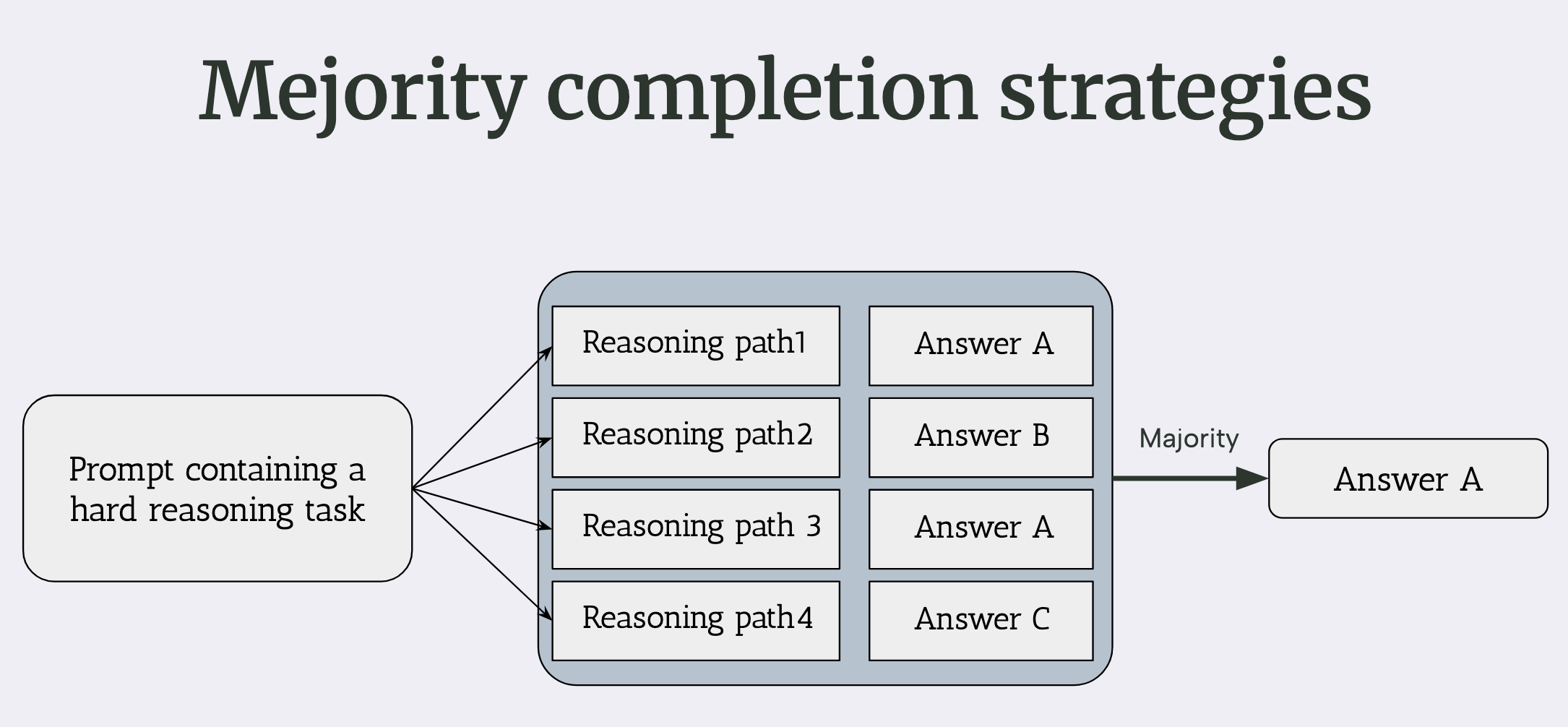
You can even hide this ensemble trick from users so it looks like one fast response.
3 · Prompting is the heart of system design
Prompting is programming in natural language, tiny tweaks can swing accuracy by double-digit percentages.
The paper Quantifying Language Models’ Sensitivity to Spurious Features in Prompt Design by Sclar et al. reminds us that a single misplaced colon can impact the accuracy ≈ +70 %.
Stable prompting + robust sampling = the backbone of any compound system.
So next time you browse a leaderboard, pause for a second:
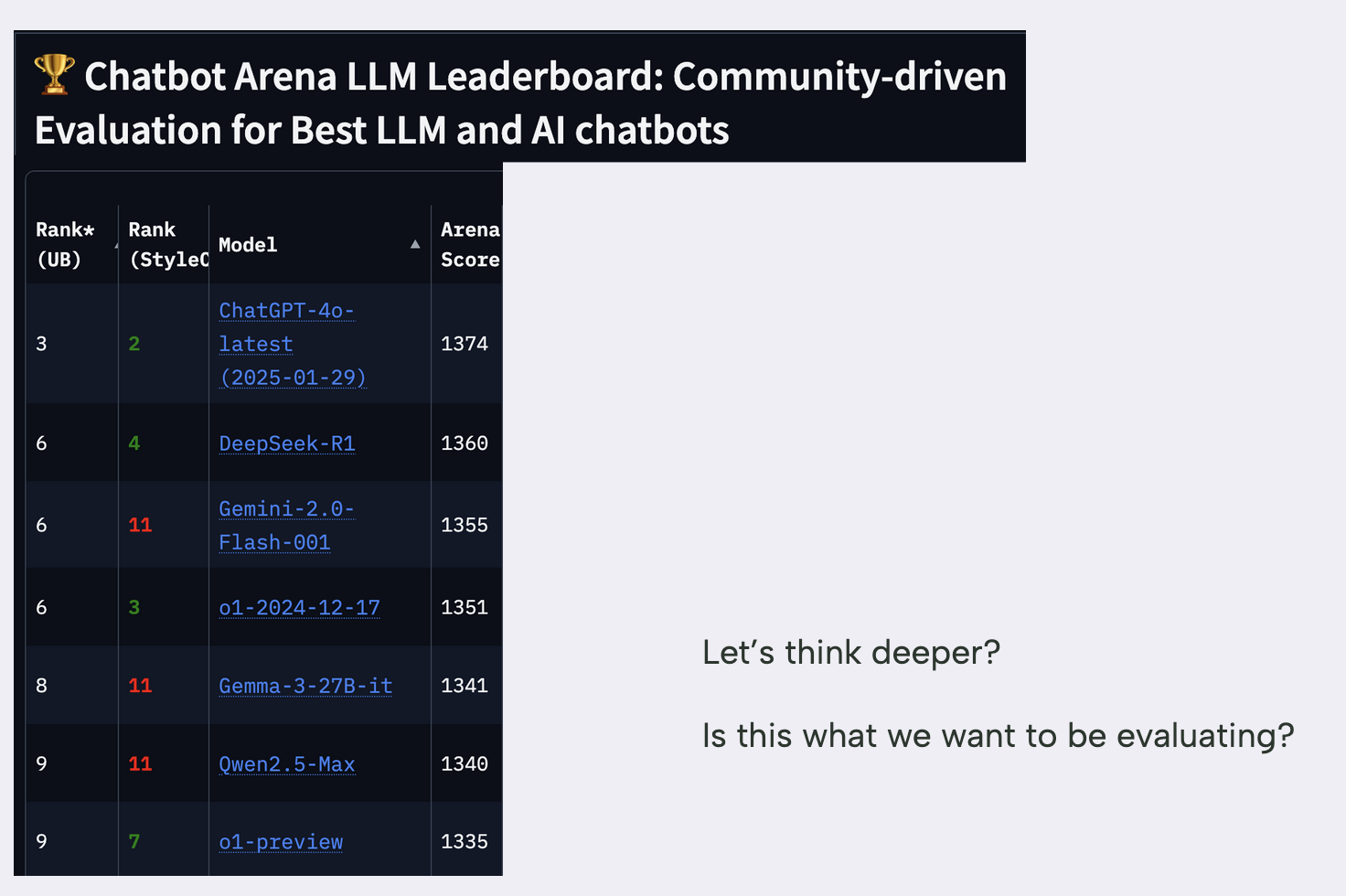
Are those scores ranking models, or the clever input engineering, sampling rules, and post-processing wrapped around them?
When you benchmark your own use-case, experiment with all or various models, not only just the trending model.
Developing compound AI System in Real world
So how do we actually ship these systems? A few hard-won lessons:
- Blend disciplines
- Software engineers bring modular architectures, testing, and DevOps.
- Research scientists bring data-driven optimisation and evaluation.
Systems built by both camps are the ones that last.
-
Design interchangeable modules
Generic, plug-and-play parts age better than bespoke pipelines.
Open-source success stories,PyTorch is a classic, show the power of clear layers and clean APIs. - Automate, don’t hand-tune
Manual prompt tweaking and single-model dependence don’t scale.
Use version-controlled prompt templates, auto-tuning frameworks (DSPy), multi-model fallbacks, and A/B tests.
Re-thinking the toolbox
Originally we called the toolbox “code runner, calculator, web search, database.”
In practice any deterministic service is fair game:
| Tool type | Example use |
|---|---|
| Execution | Python / Bash snippet |
| Knowledge | Vector search, SQL |
| External API | Weather, finance, internal micro-service |
| Validation | JSON schema, regex |
Package each tool as a micro-service, give it a clear contract, and your LLM can invoke it safely.
How about AI Agent
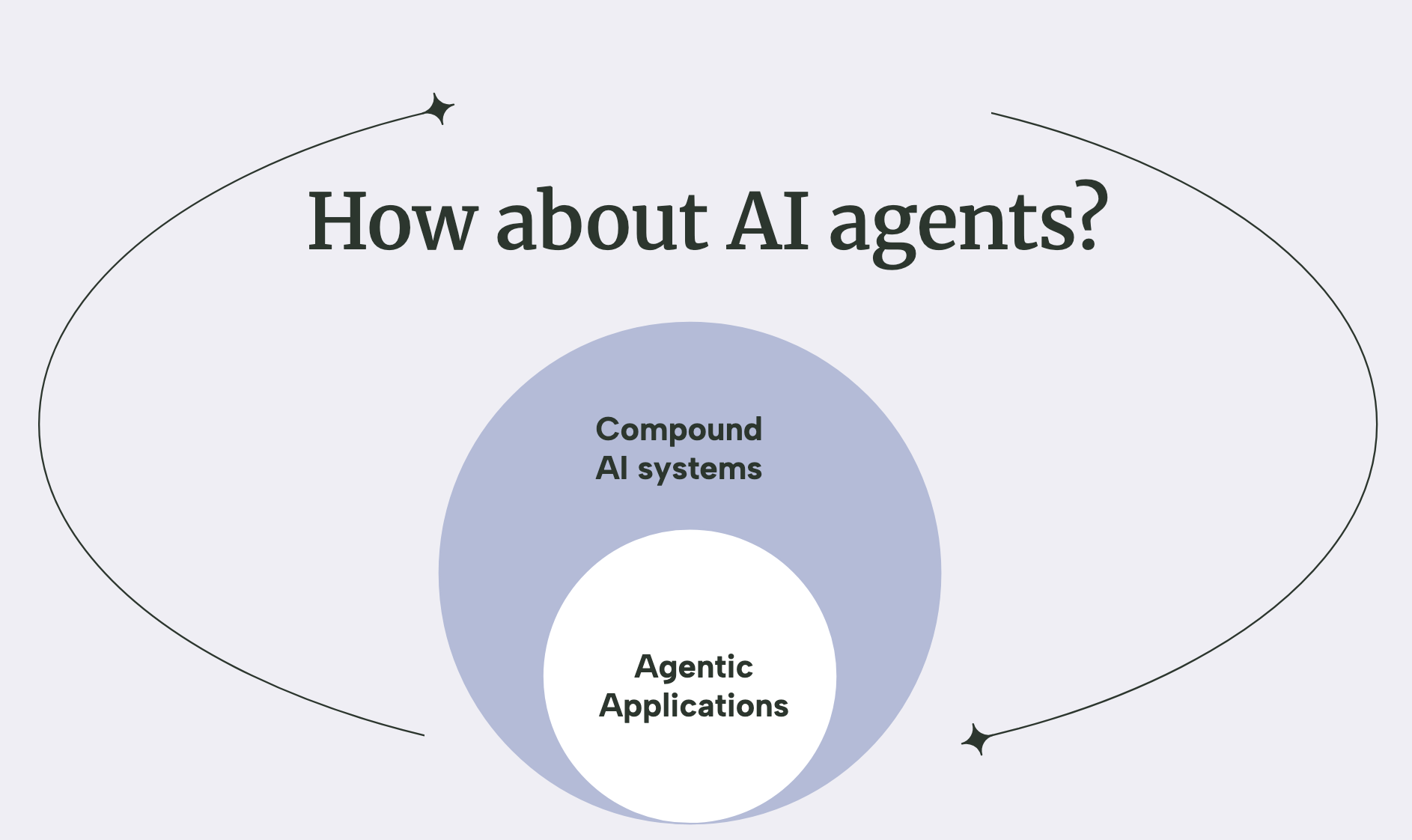
A particularly ambitious flavour of compound system is the AI agent: an LLM wired to a toolbox and empowered to take multi-step actions.
Agentic apps are on trend, but they’re also harder to build, tune, and evaluate—and, frankly, overkill for many problems.
- Fixed workflow → a simple tool chain is plenty.
- Planning, branching, feedback loops → now you need an agent.
Agents are a powerful subset of compound systems—but they’re harder to debug and benchmark, so reach for them only when the problem truly demands autonomous decision-making.
Key Challenges in Compound AI Systems
Designing system-centric solutions yields substantial benefits, yet the path to production is rarely straightforward. The same obstacles surface in nearly every engagement.
1 · Retrieval-Augmented Generation (RAG)
RAG underpins most practical applications, but it introduces a large configuration space:
| Design layer | Typical progression (simple → advanced) |
|---|---|
| Retriever | keyword search · BM25 · dense embeddings · hybrid · LLM-generated queries |
| Generator | small local model · mid-tier API · frontier model |
| Retrieval boosts | query expansion · re-ranking · hard negatives |
| Answer refinement | secondary LLM validation · tool-based fact-checking |
Recommended approach
- Begin with the simplest viable option (e.g., keyword search).
- Introduce embeddings when recall plateaus.
- Employ LLM-generated queries or advanced rerankers only after simpler stacks are fully exploited.
2 · Resource Optimisation
Each additional component increases latency and cost. Choose one dimension to relax initially and refine iteratively:
| Application context | Initial concession | Subsequent optimisation strategy |
|---|---|---|
| Internal analytics tool | higher latency | schedule expensive steps in off-peak batches |
| Customer-facing assistant | higher cost | reduce model size, cache frequent responses |
3 · Co-optimisation of Heterogeneous Modules
Compound systems combine differentiable networks and discrete tools (search, code execution, rule engines).
End-to-end gradient descent is not available; performance improvements therefore require coordinated, heuristic tuning across modules. For example, in RAG workflows the quality of LLM-generated queries and the retriever’s hyper-parameters must be optimised jointly rather than in isolation.
Operational Complexity: MLOps at the System Level
LLM agents may branch, loop, and invoke tools dynamically, complicating observability and governance. Contemporary MLOps platforms must evolve to address:
| Operational requirement | Rationale |
|---|---|
| Traceable tool calls | Enables reproduction and debugging of multi-step executions |
| Vector-DB lifecycle | Guarantees version control, warm-up, and freshness of embeddings |
| Comprehensive monitoring | Centralises logs of prompts, tool outputs, and agent reflections |
| Structured DataOps | Maintains clean pipelines for re-chunking and re-indexing corpora |
| Security & compliance | Mitigates PII leakage, jailbreak attempts, and filter bypasses |
Compound AI systems deliver considerable value—but only when these additional engineering disciplines are addressed with equal rigour.
Conclusion · From Model-centric to System-centric Thinking
If you remember just one thing, make it this:
Small, well-designed systems can beat even the biggest LLMs.
Choosing a strong base model is only the first step. Real-world performance comes from the system wrapped around that model—dynamic, tool-aware, and safety-checked.
Quick recommendations
| Goal | Try this first | Why |
|---|---|---|
| Prompt optimisation | DSPy |
Auto-tunes prompts & sampling knobs with minimal boilerplate |
| Building agents | LangGraph · SmolAgent · AutoGen | Each gives you structured, multi-step tool orchestration |
| Library list | llm-engineer-toolkit |
Curated cheatsheet of RAG, eval, and Ops utilities |
Let’s build real-world systems
Compound AI isn’t a hype term; it’s the next baseline for production AI.
Whether you’re shipping a chatbot, coding copilot, or medical triage assistant, system design is as critical as model choice.
So let’s shift our mindset.
Let’s architect smarter systems.
And let’s build them together—scientists and engineers.
Stay Connected
Links: